Tuesday, June 14, 2016

Harvest Monday - 06/14/2016

I am a day late again for this week's Harvest Monday. It wasn't a very fruitful week!! I harvested a big bunch of amaranth greens and shared them with a friend. A big bunch of  lemongrass stems also went along for company. My friend said that last year she had taken the lemongrass stems that I had shared, sliced the bulbs up thinly and dried them until all the moisture was gone. She had then powdered it and used it in her tea. I think I shall have a go at that and see if I can get some homemade lemongrass powder.
I also used up a few sorrel leaves and some spring onion greens from the garden. No pictures, however. But I am excited about a new purchase! I am now the proud parent of a Moringa plant!

I am not sure which kind of Moringa plant it is, the tag doesnt say. If you haven't heard of it before, then you can read all about this wonder plant here. Suffice it to say that the leaves of this plant are highly nutritious and the fruits or pods are edible as well. This is a very well known tree in India. Its known colloquially as drumstick and is relished as a seasonal specialty. I remember my father getting the long pods from the market. The leaves are used in stir fries and the pods are used in lentil stews. Recently, it has been hailed as a miracle plant and the western world is slowly discovering the benefits of this tree, which is native to the tropical and subtropical areas of the world. India is the largest producer of moringa. The leaves are the most nutritious part with high protein, Vit. A and Vit. C content. 
It is a very fast growing tree and since I am not sure if it will survive the winters here, I will keep it as a container plant. All information suggests that keeping the plant in the container and pruning it off regularly will keep it at manageable heights. There is already new growth at the tips and I will probably move it to a bigger container soon. I am wary about transplant shock and am wondering if I should let the plant remain in this container until the stem has thickened a little bit more. Any advice?
For more productive gardens this week, do visit the Harvest Monday roundup at OurHappyAcres.


Tuesday, June 07, 2016

Harvest Monday - 06/06/2016

I have been following the Harvest Monday posts for quite some time now, marveling at the wonderful harvests, drooling over the pictures of dishes using said harvests, appreciating the hard work that these gardeners have put into their gardens and widening my eyes over the beautiful green spaces being maintained!
Compared to these bounties, my gardening space is tiny and my harvests are very small. But they are gratifying and exciting nonetheless! I didn't plan at all for any spring harvests and my summer garden is just beginning to grow. But I have taken some offerings from my raised beds in the past couple of weeks.

Green leaved amaranth is one plant that is self sown in my patch. The first and last time that I sowed it was probably about 3 years ago. Since then, it comes up regularly like clockwork every spring and sometimes in the most unlikeliest of spaces! But you will hear no complaints from me because I love my amaranth greens. I saute them with garlic and red chillies for a simple side dish or I add chopped leaves and tender stems to lentils to make a hearty Indian daal to go with rice.                                     
This year I am also growing Roselle (Hibiscus Sabdariffa or sorrel). Many Indian dishes use the tangy leaves extensively for chutneys and such, but the rest of the world apparently also uses the dark red calyces for syrups! 


A few overgrown spring onions and a lone garlic. The spring onion bulbs were still edible and the garlic was pulled out because the resident pest stamped all over it and bent the stalk. Plus I was very curious to see how much it had grown; this being the first time that I planted garlic!  


I also pulled out several stalks off my lemongrass bush. It had surprised me considerably in the spring by not only surviving the winter but also thriving splendidly!  The clump of bushes is providing a hiding nook for the rabbits who are viewing my little vulnerable patch like a 24/7 buffet. I cut away the outer leaves, trimmed each stalk to a manageable length. The picture above shows the stalks with the roots still attached, but I removed those and washed them clean before putting them in a ziploc and stowing them in the freezer. I still have about 2/3 of the bush to harvest. I am planning to use them in teas and lemonades, to flavor rice and also in curries. Since a little lemongrass goes a long way, I should have a nice supply for the coming months.


The above picture shows several seedlings of my holy basil. A traditional house in India is never without a holy basil plant. It is considered sacred there, being heavily used in religious ceremonies. It is also cultivated for its medicinal use.  The leaves are highly prized for their use in respiratory disorders, fevers and stress. A few months ago, it looked like I wouldn't have this wonder herb in my backyard for the first time in a decade.  But thankfully that was not to be. I plan to get a bigger container for these plants and nurture them into a big bush that I can move into the house during colder temperatures.

That's it for this week! 
For other amazing harvests, visit the Harvest Monday roundup at Our Happy Acres.

Monday, February 22, 2016

Embracing the gardening bug!

For the past couple of years, I have noticed a recurring theme in my behavior when the beginning of the year comes around. I seem to get bitten badly, by the gardening bug..I mean! I dream of seeds, regular and exotic. I surf gardening blogs like they are going to become extinct. I make notes (in my head, of course) of all the different types of vegetables that can be easily grown in the home garden. It doesn't help that there are gardeners out there, with exceptional blogs, who showcase such beautiful harvests that are definitely drool-worthy. I await warmer temperatures with a fervor that only a fellow gardening enthusiast can understand!!!
By no means do I consider myself an expert, an amateur at the most, with some small success in growing certain vegetables. I don't have self sufficiency in home grown vegetables, meaning I definitely have to spend my money at the grocery store. But that does not mean that I cant dream about it :D

Things that are currently growing at home:
IMG_20160220_132603876

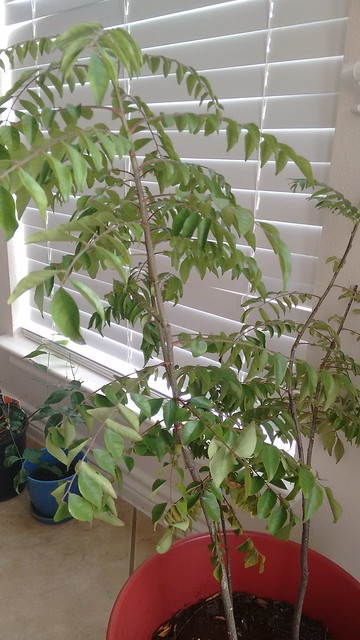
My curry leaf plant that has been babied and cosseted and pampered and is rewarding me by growing steadily :) I am going to prune the tops off in the spring to encourage more branching. 

IMG_20160220_132634378

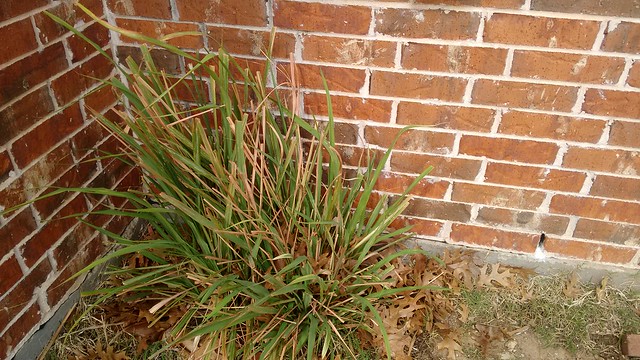
The lemon grass experiment: I bought some healthy looking firm stalks from the Indian grocery store and rooted them in water. Then, I stuck them in the ground and watered them when they looked dry and pretty much ignored them after that. When winter was about to set in last year, I harvested the outer most thick stalks and gave them away to friends. Surprisingly, they survived the winter and seem to be holding steady!

My lemongrass bush has also survived the winter here and was recently given a haircut. I still need to trim it a little bit more and make it look neater. I love the lemony clean scent of its leaves. What I don't like is the Resident Rabbit who seems to think hiding behind my bush makes him invisible {grrr}

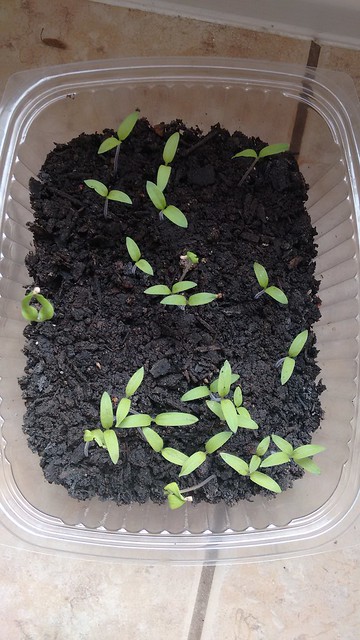
My chili seeds (Baker Creek Thai Green) and tomato seeds (Roma tomatoes from Home Depot) have already germinated. The reason I am starting the tomatoes so soon is because peak summer brings really soaring temperatures here in the North Dallas area and the poor tomato plants cannot bear any fruits then. So they need to get a flying start even before they are transplanted into the ground.

IMG_20160220_132534797


Some for me and some to be shared with friends.

Gardening is hard work. What (and how you sow), so shall you reap! (This was most probably coined by a gardener and then was used as an allegory to life!). Planning, organization, preparing the beds, sowing seeds, removing weeds, watering consistently, fertilizing if required, checking and dealing with pests - these are all required tasks to do in the garden and in order to harvest anything worthwhile, one must certainly be prepared to put in time, effort and last but not the least, patience!!!
But having said that, I can also say that gardening - in all its wonderful forms is almost cathartic. Working systematically and methodically in the garden, paying attention to the soil running in between your hands, inhaling the intoxicating fragrance of wet soil, tending to the seedlings and plants and the utter joy in getting the (literal) fruits of your efforts is enthralling. The best stress buster that I can think of, that also lets you get a healthy dose of air and sunshine.

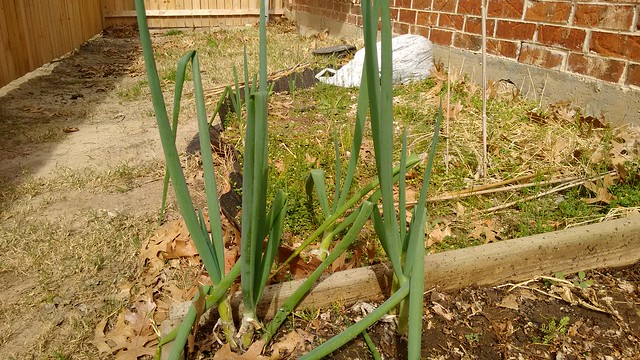
Coming back to my little patch, I didn't plan for any spring harvests, but a few green onions that I had planted last fall have overwintered and to my utter surprise have also divided into more plants!
Considering that they started as root ends of store bought green onions that I stuck in the ground, that looks like a great return on investment for basically sticking them in and then forgetting all about them!
IMG_20160220_132701882
I have used up the tops of these spring onions several times as garnishes on my potatoes. I will pull them up as and when I need them so that I can make space for fresh ones soon.


IMG_20160220_132652110
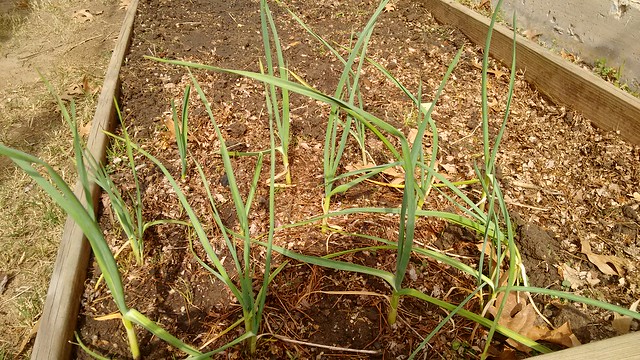
Another experiment: I selected about 12 - 14 firm cloves of garlic and planted them out in a corner of my vegetable bed in the fall. They seem to be growing well. I mulched them with some shredded leaves and watered them occasionally. I havent fertilized them.


There is a serious dearth of flowers in my garden now and I want to rectify that. To that end, I have started some asters and zinnias also. Hopefully I can grow some nice flowers this year.

I still have some prepare my beds before I can start sowing directly in the ground. But I am really looking forward to the growing season. For inspiration and visual treats, do check out http://ourhappyacres.com/
Every Monday, gardeners from all over showcase their vegetable beds and harvests and their low of gardening and self sufficiency is truly amazing.

I hope to be more regular with my posts here, so wish me luck.
Until then - May the grass always be greener on your side of the fence :)


Thursday, October 01, 2015

Anjeer Halwa / Fig pudding

Festivals have a way of energizing people, infusing them with the sense of exuberance, joy and excitement. I suspect this is true worldwide. I experienced this myself when I was growing up in India. The anticipation of an upcoming festival would drive my mom and all the neighboring ladies into a cleaning and cooking spree. Preparations would start days before the actual day of the festival and everybody in the vicinity (read my dad, my brother and I) would be roped in to help! Since we were always ready to gobble the delicacies, we would always help.
One of the major festivals celebrated in India is Ganesh Chaturthi. This is a festival that was instituted as a publicly celebrated festival in the city of Pune since the time of Shivaji Maharaj and the Peshwas. Although the fall of the Peshwa regime saw the decline of the celebrations on a public scale, it was revived again by Indian freedom fighter, Lokamanya Tilak and continues to this day.
But, I digress. The impending arrival of the elephant headed God sprinkled magic over homes grand and humble. Schools had holidays, office goers got a day off and entire families and communities could celebrate this festival in togetherness and harmony if they so wished!
I miss that excitement and fervor in the States. People obviously celebrate, mingle and whip up delicacies at home. But schedules dont match, working moms have a tough time trying to adhere to customs and their other responsibilities. But all was not lost this year, despite having to work on the day of the festival and having to attend a meeting at my son's school. Although I couldnt make the usual sweets and treats that I try to make every year, I couldnt let the festival pass without even a token offering to the God of knowledge and wisdom.
I made panchakajjaya, which is very easy to prepare and which I usually make.
I also tried a new sweet this year, since it seemed as if I had all the required ingredients. I had seen a recipe for Anjeer Halwa (Fig pudding) in a Tarla Dalal newsletter and that was what was offered.

IMG_20150917_193939304

Ingredients:
15 - 18 dried figs
3 Tbsp ghee
1/4 C almonds - blanched, peeled and crushed into a coarse powder
4 tbsp sugar
4 tbsp milk powder
1/4 tsp cardamom powder

Method:
1. Boil enough water and soak the dried figs in the water for at least 2 hours or until softened.
2. Once softened and cooled, drain the figs and pulse in a food processor with a little of the soaking water.
3. Reserve a teaspoon of the ghee and heat the remaining in a thick bottomed pan.
4. Add the powdered almonds and cook on medium flame. I only had raw almonds and thats what I used.
5. Add the pureed figs, milk powder and sugar along with a quarter cup of water.
6. Cook on a medium flame for at least 5 minutes, stirring continuously.
7. Add the cardamom powder and mix well. Take off the flame when the mixture thickens slightly.
8. Garnish with slivered almonds or cashews roasted in ghee and serve hot or cooled.

Notes:
While I really liked the complex flavors of the figs, my family members were not as enthusiastic! They accepted the token teaspoon of 'prasad', but didnt ask for it again. The kids felt it was too crunchy (from the fig seeds). Oh, well! Hopefully at least the Lord was appeased!
* Figs are a good source of dietary fiber and minerals such as iron, potassium and magnesium. So its definitely worth having in the kitchen for a healthy diet.
** I apologize for the not quite good quality of the picture, it was late, the family was looking forward to dinner and I didnt have a lot of leeway to stage a photo!

Tuesday, September 29, 2015

Organic India Tulsi Tea - review


The one plant that is most commonly found in Hindu households is the Tulsi or the holy basil. In traditional homes, where there is ample space around the house, this humble plant is usually found right in front of the doors. The tulsi has such cultural and religious importance that even apartment dwellers and people residing outside India usually have the bush growing lushly in containers. The reason is simple - the Tulsi plant has been revered since ancient times for its medicinal uses. The western world has recently opened its eyes to the wide array of beneficial uses of Tulsi, but the ancient medicinal system of Ayurveda has always indicated the usage of Tulsi for managing respiratory disorders, enhancing immunity and even for reducing stress.

The research into this wonderful herb has indicated that it is an adaptogenic herb, meaning that it has been shown to support the body's natural immune system while relieving the body's negative reaction to extreme stress. Such herbs have been used in traditional Ayurvedic and Chinese medicines for thousands of years for promoting and maintaining wellness. Adaptogenic herbs help the body adapt to environmental, physical and emotional stress, support normal functions and restore balance.


When Green Moms Meet gave me the opportunity to try Organic India's Tulsi Tea, I literally jumped at the chance. I have a much loved Tulsi bush at home. I regularly pinch off the leaves to make a herbal concoction for my family when the sniffles hit. But I had never really tried herbal teas combining Tulsi leaves with other ingredients and was really curious about it. Organic India has an enormous collection of herbal tea blends and they all contain a variety of Tulsi leaves.
The first tea that I tried was the Original formula, which contained just the blend of the Tulsi leaves. I like to sip on this when I am working. Its smooth and mellow flavor warms me up as I sit at the computer. The next one that I tried was the Sweet Rose blend. I was intrigued by this combination, not sure how the floral notes of the gorgeous rose would complement the earthy tones of the Tulsi. But I definitely need not have worried. The tea was delightful! The sweet floral fragrance was enough to sweeten this herbal tea. No need to add sugar!
I have yet to try the remaining flavors - Raspberry peach, Tulsi Green tea , Pomegranate Green tea - I am looking forward to try them all!
Here are a few other facts about this product:
* Each of the Tulsi tea blends is abundant in antioxidants, it is certified organic, tastes great and offers stress relief, increased energy and a boost to your natural immune system.
* All the organic Tulsi teas include the three varieties of Tulsi leaves: Rama, Vana and Krishna. Each variety has a slightly different look, taste and smell.
* Organic India Tulsi tea is USDA Certified organic, non GMO, Kosher and Halal certified, gluten free and vegan.
* Each box (containing 18 tea bags) retails for $5.99

Each box also has a picture of the farmers involved with the Organic India group (I found this very heartening)
If you want to try these teas for yourself, you can save 20% on Organic India products by using the code kiwi20 online. This is for a one time use only.

Here are a few more links for your perusal:

www.organicindiausa.com
www.facebook.com/OrganicIndiaUSA
www.twitter.com/OrganicIndiaUSA

Disclaimer: I received this product for free from the sponsor of the Moms Meet program, May Media Group LLC, who received it directly from the manufacturer. As a Moms Meet blogger, I agree to use this product and post my opinion on my blog. My opinions do not necessarily reflect the opinions of May Media Group LLC or the manufacturer of this product.